Cheese Crimes: Are You Committing a Dairy Felony?
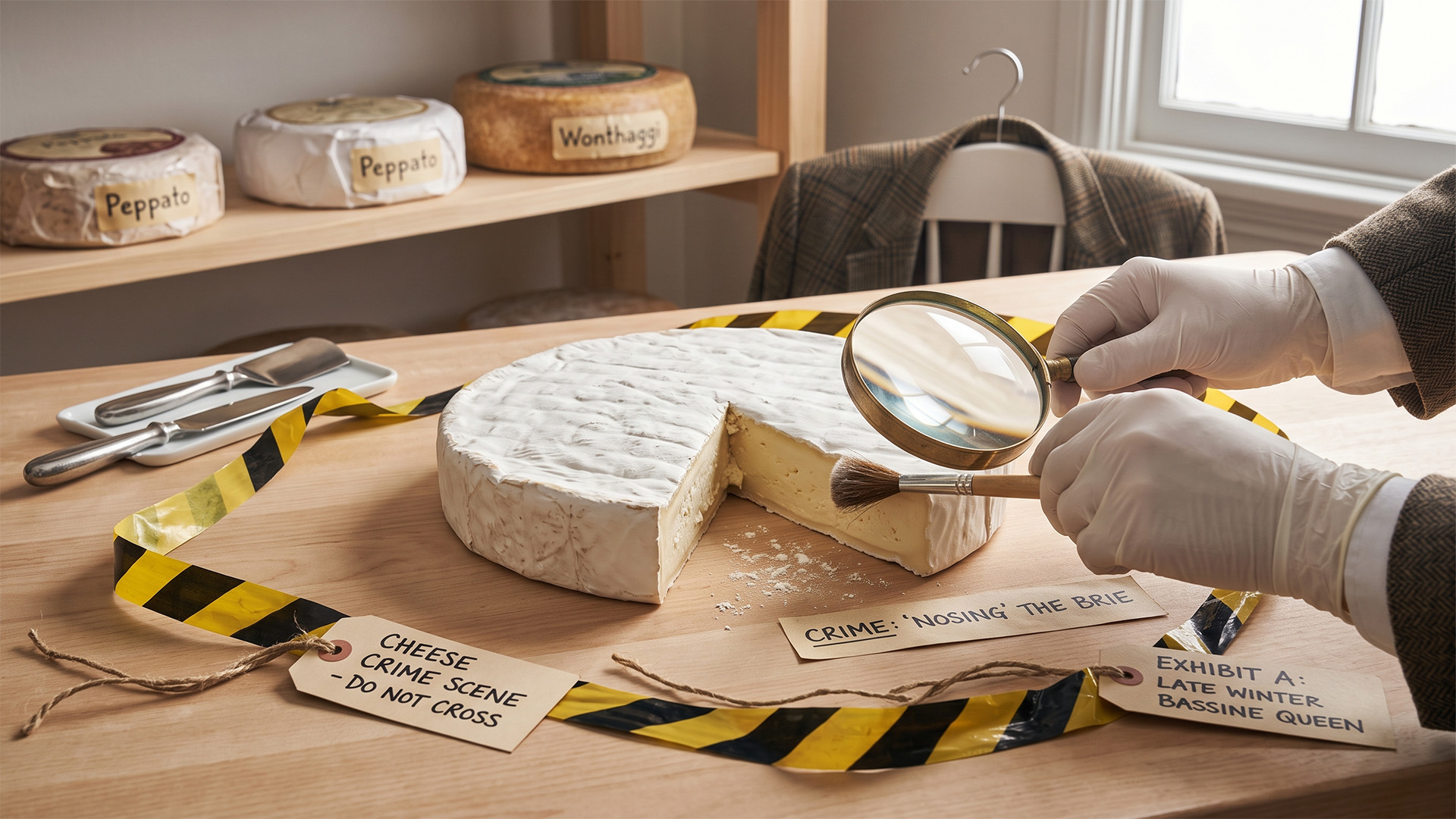
There is a particular silence that falls over a French dinner table when a guest gets the cheese wrong, and I heard it in my first month in the country — right as my knife came down through the nose of the brie.
Nobody said a word. In France, nobody has to.
I lived there for four years, and the first thing you learn — before the language, roughly alongside the shrug — is that cheese has laws. Not suggestions. Laws. Nobody writes them down, everybody enforces them, and a foreigner discovers each one the same way: by breaking it in front of witnesses.
Now, Bassine is a long way from Paris, and we like it that way. The farm shop runs on first names, and nobody here will go quiet over how you hold your knife. But a few of those laws turn out to have nothing to do with etiquette and everything to do with chemistry — and once you know them, your cheese simply tastes better.
So consider this the rap sheet. Four crimes we witness every week, why each one matters, and how to walk free.
Crime #1: Amputating the Nose
The offence: taking a wedge of Bassine Queen and slicing the tip clean off.
It feels harmless. It is the single fastest way to make enemies at a French table.
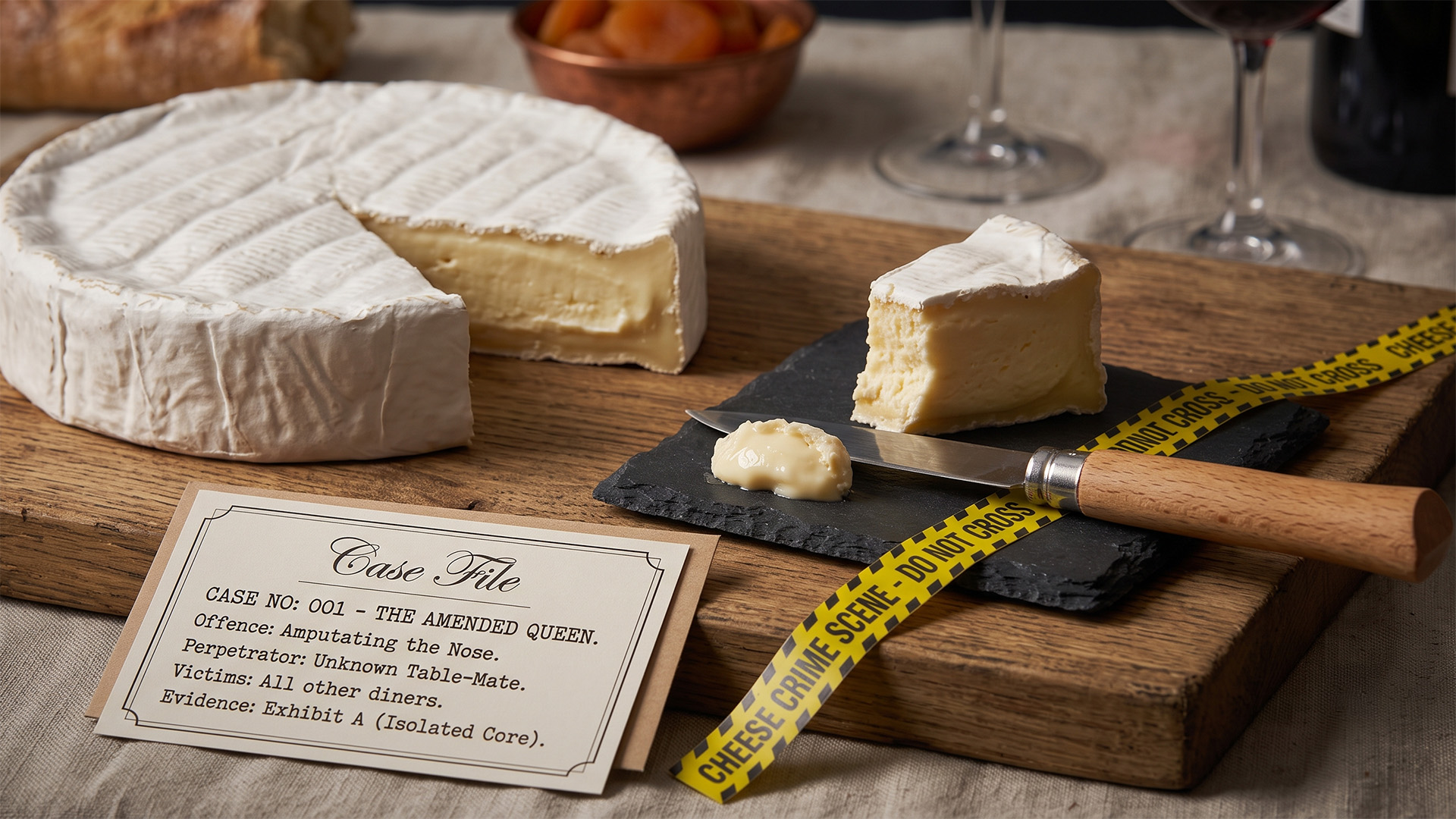
Here’s why. A wedge of brie is a map of the whole wheel. Soft-ripened cheese ripens from the outside in — enzymes from the rind slowly break the firm young curd down into that glossy, spoonable paste — which means the tip of your wedge is the wheel’s centre: the softest, ripest, most luxurious bite in the entire cheese. Cut it off and you haven’t taken a slice. You’ve taken everyone’s share of the middle, and left the table a wall of crust.
The correction: cut along the wedge, tip to rind, so every piece makes the full journey from gooey centre to earthy edge. Fair for everyone. Also, quietly, a better bite.
Crime #2: The Scooper
The offence: digging the soft middle out of the wheel and leaving behind a hollowed shell of white rind, like a small abandoned igloo.
We understand the impulse. The middle is soft. The rind looks like packaging.
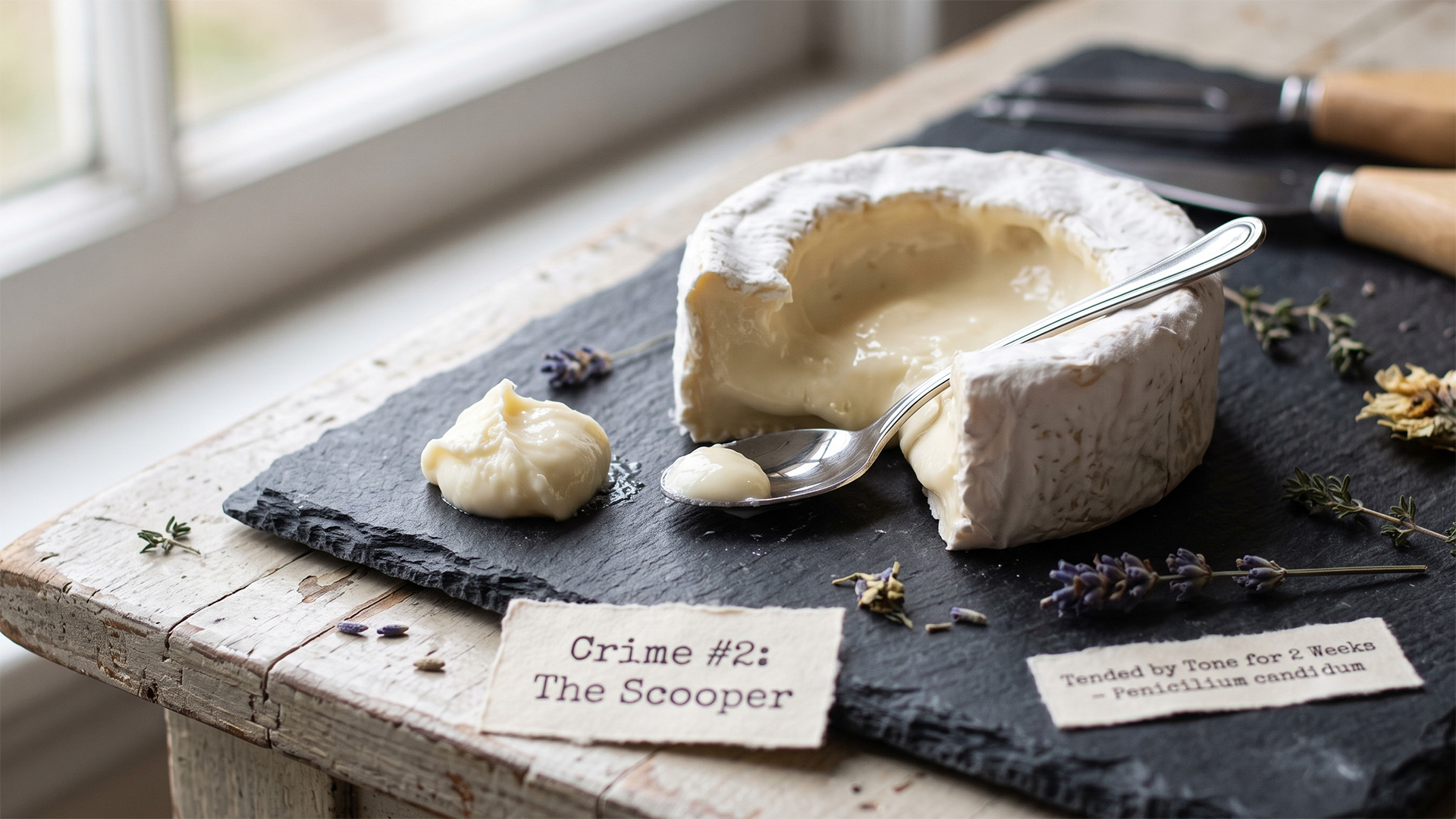
It isn’t packaging. That white coat is Penicillium candidum — a living mould that Tone seeds onto every Queen and then tends for two weeks while it blooms, knits itself into a rind, and quietly ripens the cheese underneath. The mushroomy, earthy note that makes brie taste like brie? That’s the rind talking. The paste on its own is just very good cream.
The rind isn’t the box the cheese arrived in. It’s the kitchen it was cooked in.
The correction: eat them together — paste and rind in the one bite, the way it was built. Tone spent a fortnight growing it for you. The least you can do is show up.
Crime #3: The Deep Chill
The offence: pulling a wedge of Wonthaggi or Peppato out of a four-degree fridge and serving it straight onto the board.
This crime isn’t against the cheese. It’s against you.
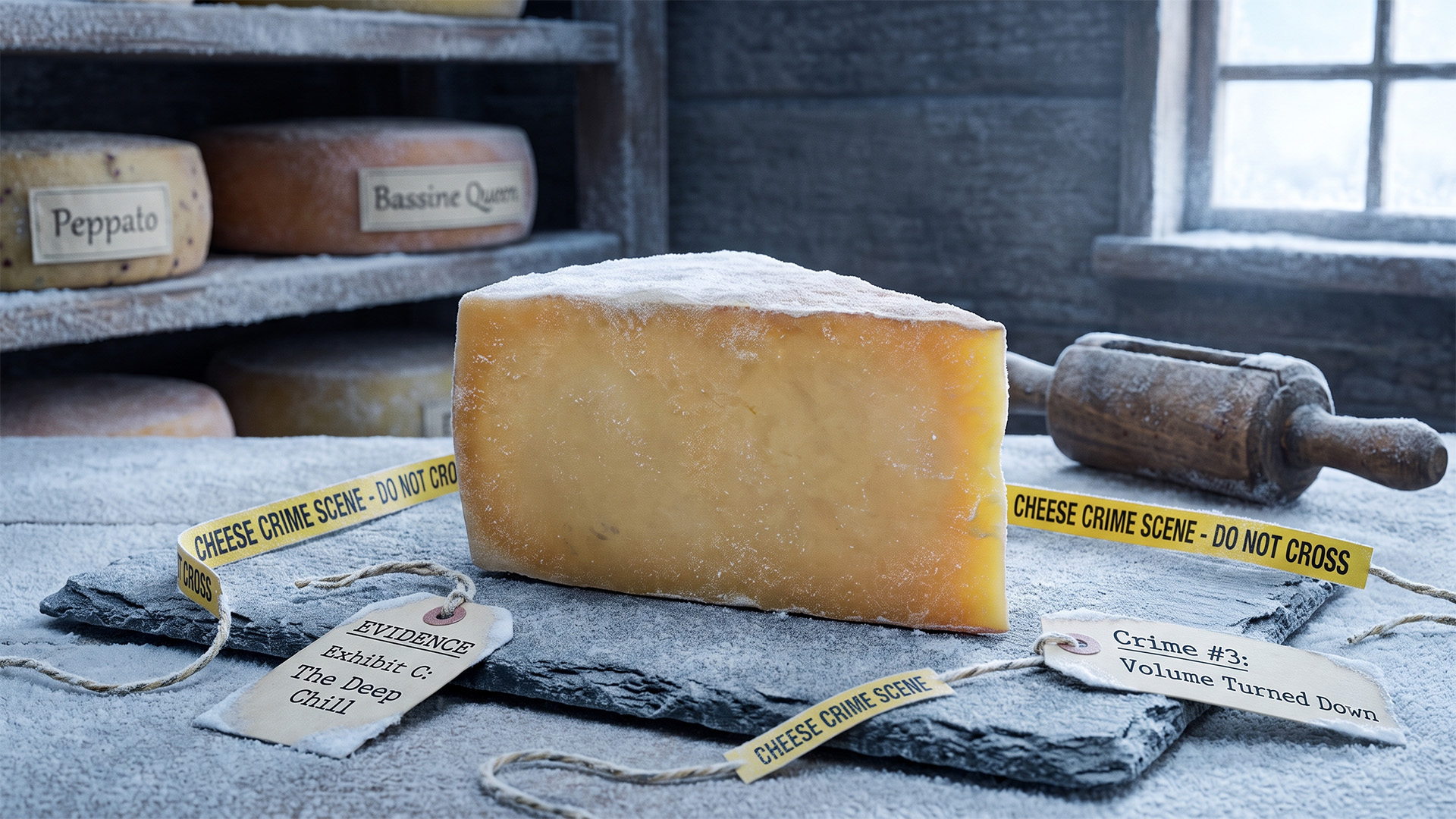
Nearly everything you love about a cheese — the tang, the grassy notes, that long nutty finish — is carried in its butterfat, and cold fat holds flavour like a fist. At fridge temperature the fat sits solid, the aroma compounds stay locked inside it, and your nose — which does most of what you call tasting — receives almost nothing. You’re not eating a milder cheese. You’re eating the same cheese with the volume turned down.
The correction: give it an hour on the bench before serving. The fat relaxes, the aromas lift off, and a cheese that seemed shy at four degrees turns out to have been shouting the whole time.
Crime #4: The Plastic-Wrap Smothering
The offence: wrapping the leftovers skin-tight in cling film and entombing them in the fridge door.
It looks responsible. It’s a slow suffocation.
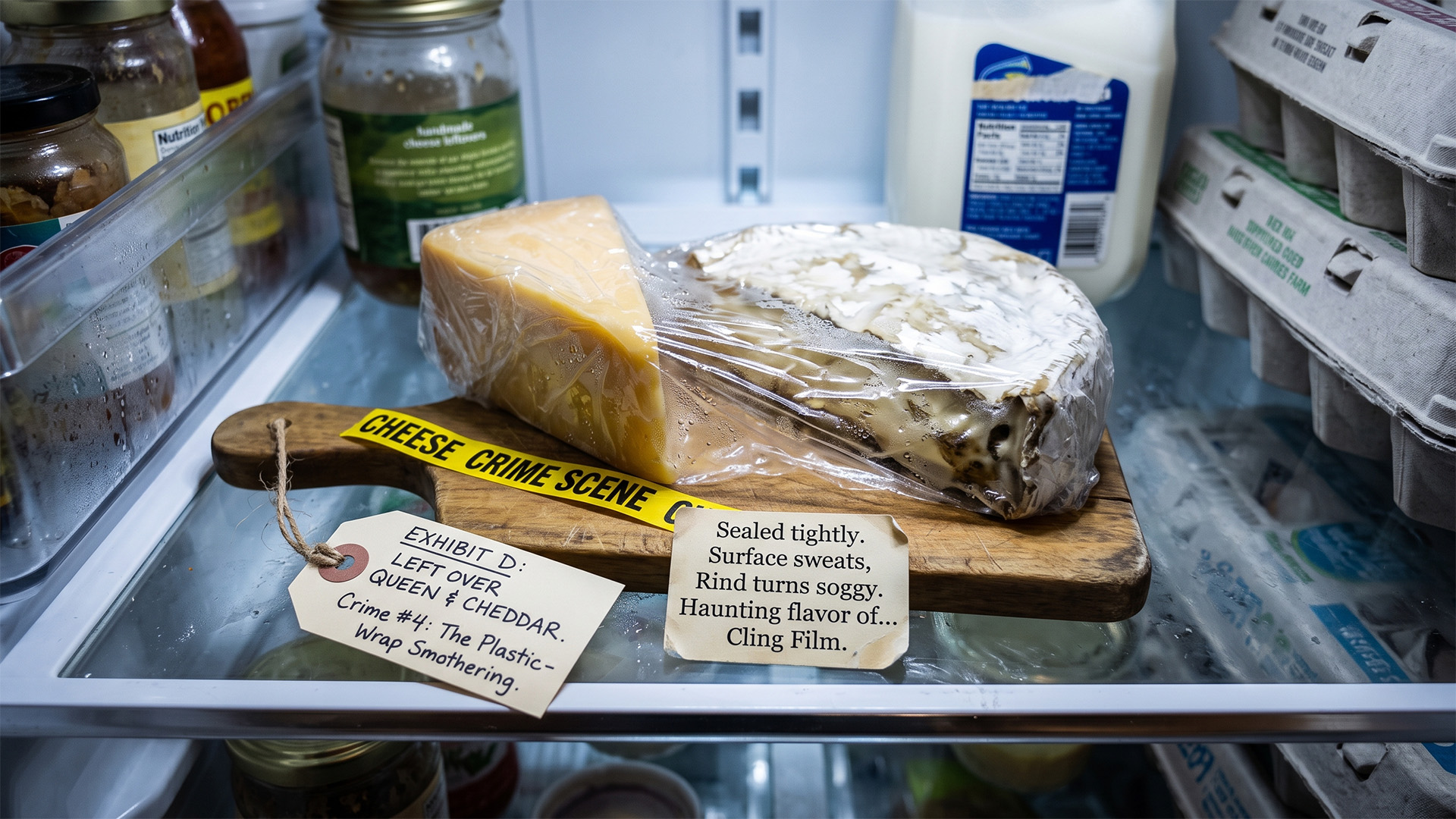
Cheese is alive — full of cultures that are still breathing, still working, still giving off moisture. Sealed in plastic it can’t exhale, so the surface sweats, the trapped damp turns the rind soggy, and within a few days your handmade cheese has taken on the distinct and haunting flavour of… cling film.
The correction: baking paper, cheese paper, or a container with a little airflow, down in the crisper drawer. Wrapped loosely, like a present. Because it is one.
Lesser Charges (fines only)
For the record, the court also recognises several misdemeanours.

The One-Knife Bandit, who drags the same blade through everything on the board until the Queen tastes faintly of Peppato. The Cuber, who reduces a hand-cut wedge of Aged Cheddar to identical chilly dice, as though it arrived from a catering pack. And the Cracker Architect, who builds a five-storey tower of quince paste and prosciutto on a sliver of cheddar, then wonders where the cheese went.
None of these carry jail time. All of them carry a look.
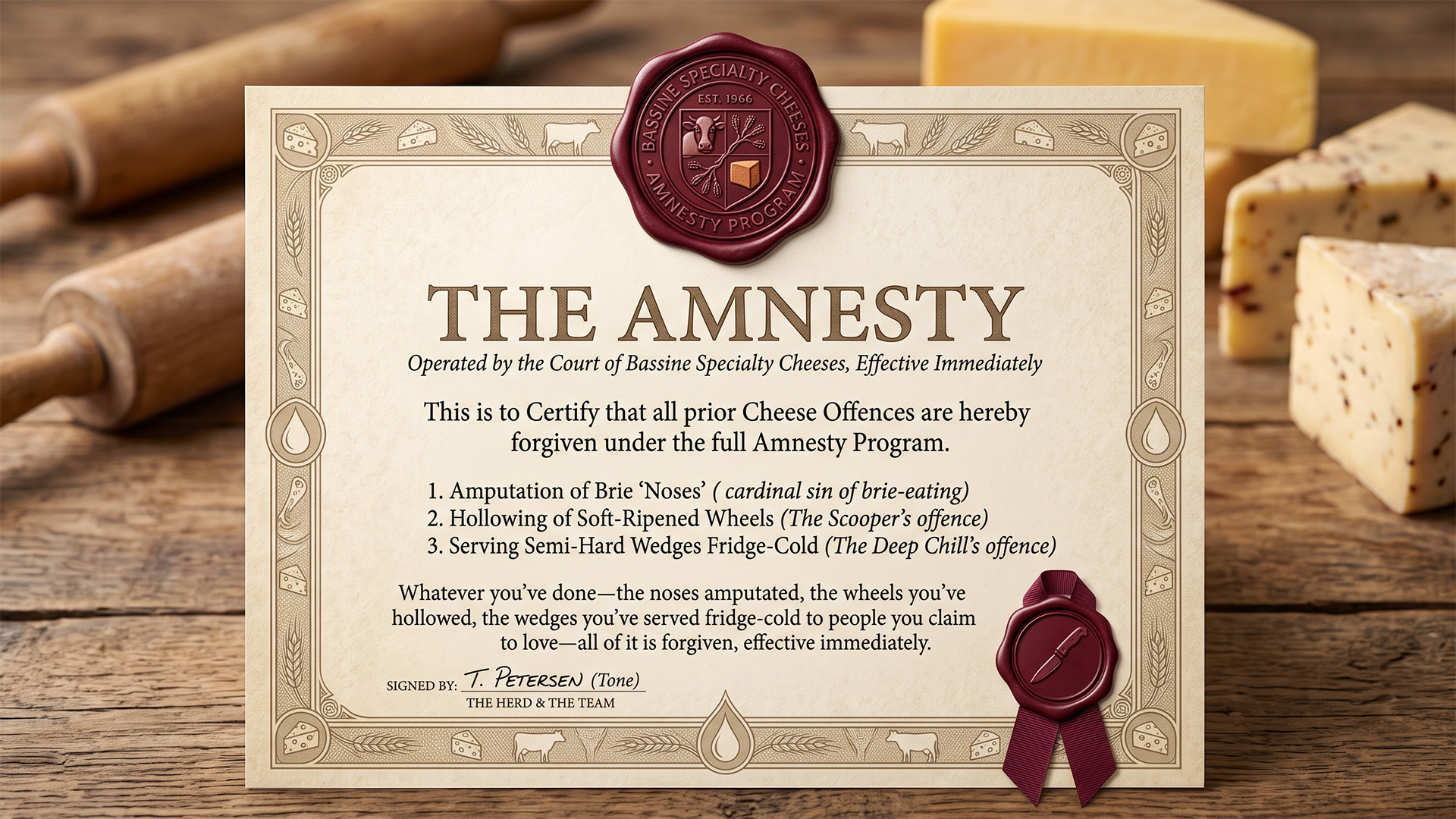
The Amnesty
Here’s the good news: Bassine operates a full amnesty program.
Whatever you’ve done — the noses you’ve amputated, the wheels you’ve hollowed, the wedges you’ve served fridge-cold to people you claim to love — all of it is forgiven, effective immediately.
There is one condition. Come down to the farm shop this weekend, pick up a fresh wheel of Queen or a wedge of Wonthaggi, and complete your rehabilitation properly: cut along the wedge, eat the rind, give it an hour on the bench, wrap it like it matters.
The French have laws. We just have very good cheese — and now, so do you.
(And if you know a NOSE CUTTER — and you do — send them this. Gently. We were all guilty once.)