Autumn milk: How Bassine Farm makes richer cheese — inside
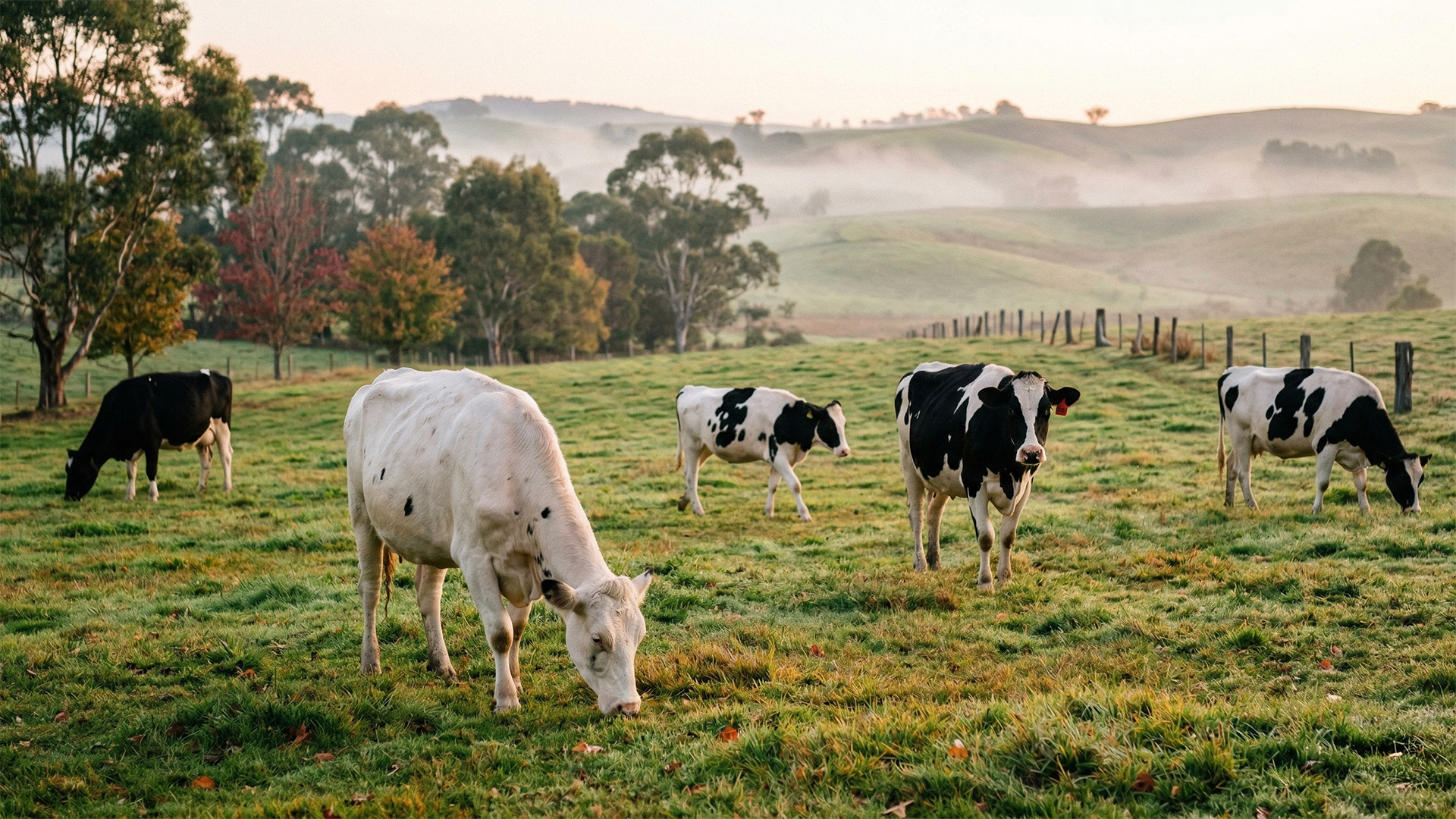
Autumn at Bassine means cold pre-dawn air, dew on the grass, and a herd that moves a little slower—closer to the barn and the feed. That shift isn’t just scenery: it changes what the cows eat, how much they need, and the very milk that becomes our cheese. If you want to know exactly how autumn alters feed, calving and the flavour and texture of Bass River cheeses, you’ll find it here.
This is one of our favourite times of year at Bassine. The light goes golden earlier in the afternoon, the hills go quiet, and the whole farm settles into a different kind of rhythm.
The Herd Feels It First
Our Holsteins have been on this land a long time. The herd goes back to when Glen’s parents, Attilio and Mary, first started the dairy in 1966. These cows know the seasons. You can see it in how they move as the weather turns — slower, more deliberate, sticking closer to the barn in the evenings.
As the pastures begin to wind down — the summer flush well and truly finished — the cows start pulling more from stored forage. Silage, hay, a more balanced mix to keep their energy up as the temperature drops. Glen watches their condition closely through this changeover. It’s not just about milk yield, though that matters. It’s about keeping the herd healthy and settled going into the colder months.
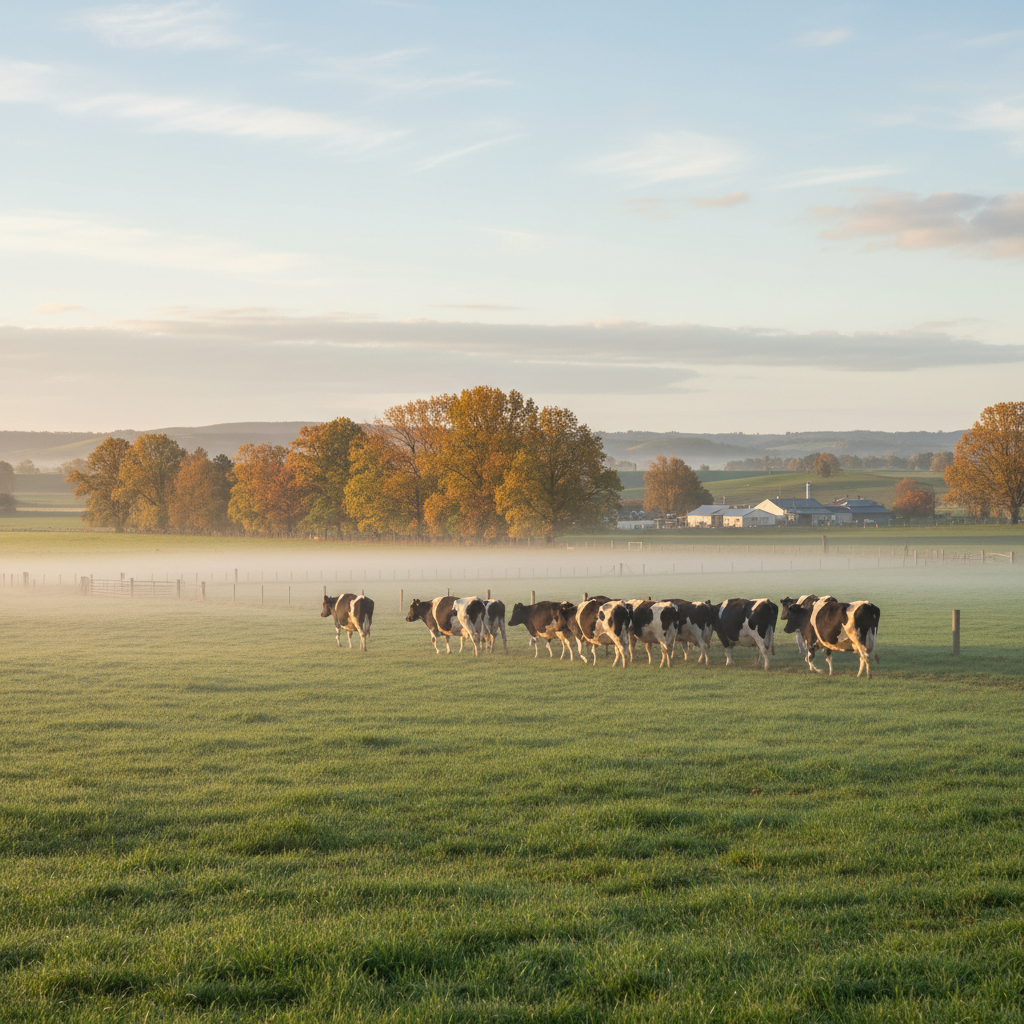
Holstein cows are productive animals, but they’re particular. They like consistency. A slow transition between pasture and forage keeps their digestive systems steady and their output reliable. Rush it, and you pay for it. Take your time, and the cows reward you.
When the nights cool properly, something else happens too: feed intake goes up. Cows in cold weather burn more just to stay warm, so we make sure there’s enough in front of them. Good bedding, dry shelter, and plenty to eat. It sounds simple. Most good farming does.
What Autumn Does to the Milk
Here’s the part that matters to us — and, we think, to you.
Autumn milk is different. It’s richer. As the cows move off summer pasture and the season shifts, the fat and protein in the milk begin to rise. Our milk is non-standardised and non-homogenised, so what the cow produces is what goes into the bottle — and into the cheese. We don’t adjust it. We don’t correct it. What the season gives us, we use.
You’ll notice it if you’re paying attention. The cream line on a bottle of Bass River Dairies milk sits a little higher in autumn. The flavour is deeper — not sharp, just more present. There’s something almost nutty about it, particularly as the season gets later and the pasture gives way to cool-weather grasses.
Tone notices it too. As head cheesemaker, he’s working with this milk three days a week. He can feel when the curd behaves differently — and autumn curd often does. It’s slightly firmer, holds together a little better, gives you a cheese that sets with more character. The Bass River Gold we’re cutting in winter started its life as autumn milk. So did the Aged Cheddar that’ll spend the next twelve months wrapped in cloth.
There’s a long game being played here, and autumn is one of its most important moves.
Calving Season and New Beginnings
Autumn also brings calves. Not all at once — this isn’t a production facility — but the calving schedule tends to cluster around now, and it changes the whole feel of the farm.
A new calf arriving in the pre-dawn cold requires full attention. They’re dried off quickly, kept out of the wind, and given colostrum within the first couple of hours. That first feed matters enormously. It’s what sets them up for everything that comes after. Glen’s done it enough times to move through the routine without thinking, but he never takes it lightly.
The calves that arrive in autumn grow up in winter, which makes them tough from the start. By the time spring comes and the pasture flushes green again, they’re already finding their feet on the land they’ll spend their lives on. It’s a good way to begin.
Come and See It for Yourself
There’s something about the farm in autumn that’s hard to describe without standing in it. The light through the barn in the late afternoon. The steam rising off the milking shed in the morning. The cheese maturing quietly in the cool room while the herd grazes the hill behind it.
If you haven’t driven the Bass Highway recently, this is a good time to do it. The country between Phillip Island and Wonthaggi is at its best in April and May — and we’re right in the middle of it.
Come in for a platter, a milkshake, or just a piece of Bass River Gold and a look through the production window. Tone’s in on Mondays, Wednesdays, and Fridays if you want to see the cheese being made.
Everything’s connected here — the season, the pasture, the cows, the milk, the cheese on your plate. Autumn is just when it’s easiest to see.
If readers want to time a drive along the Bass Highway, Visit Victoria outlines seasonal highlights for Phillip Island and Gippsland. Phillip Island and Gippsland.