Single Herd Cheese: Why One Herd, One Milk Matters
Most cheese starts with a phone call.
When a factory receives a tanker the milk has usually been blended, homogenised and standardised to deliver predictable cheese. At Bassine the milk in our vat each week comes from one herd on one farm — unhomogenised and unadjusted — so the pasture and season travel into the curd. This single-herd milk is exactly why our cheese’s texture, ripening and flavour shift with the seasons.
That’s not a criticism. It’s just how large-scale dairying works. Consistency is the goal, and consistency requires control.
We do it differently. Not because we’re contrarian, but because we only have one herd.
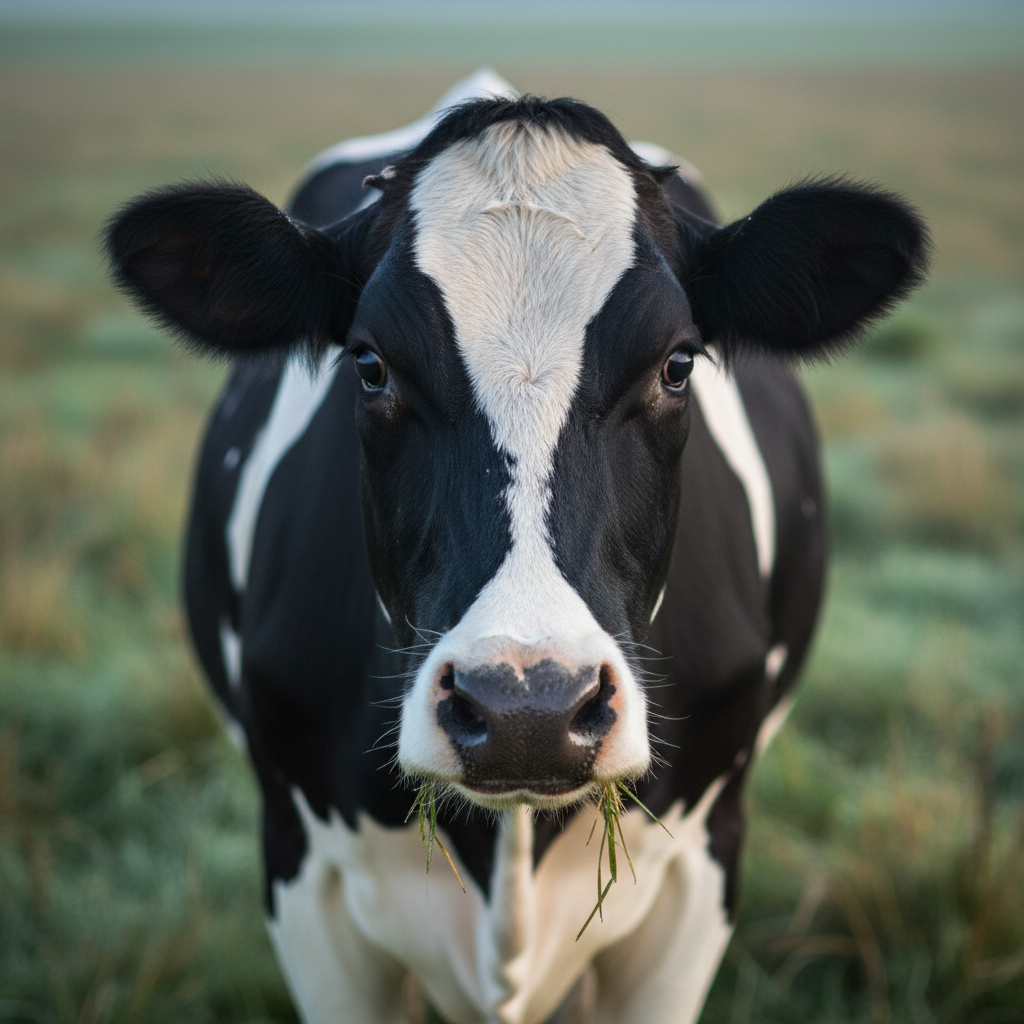
One Herd. One Milk.
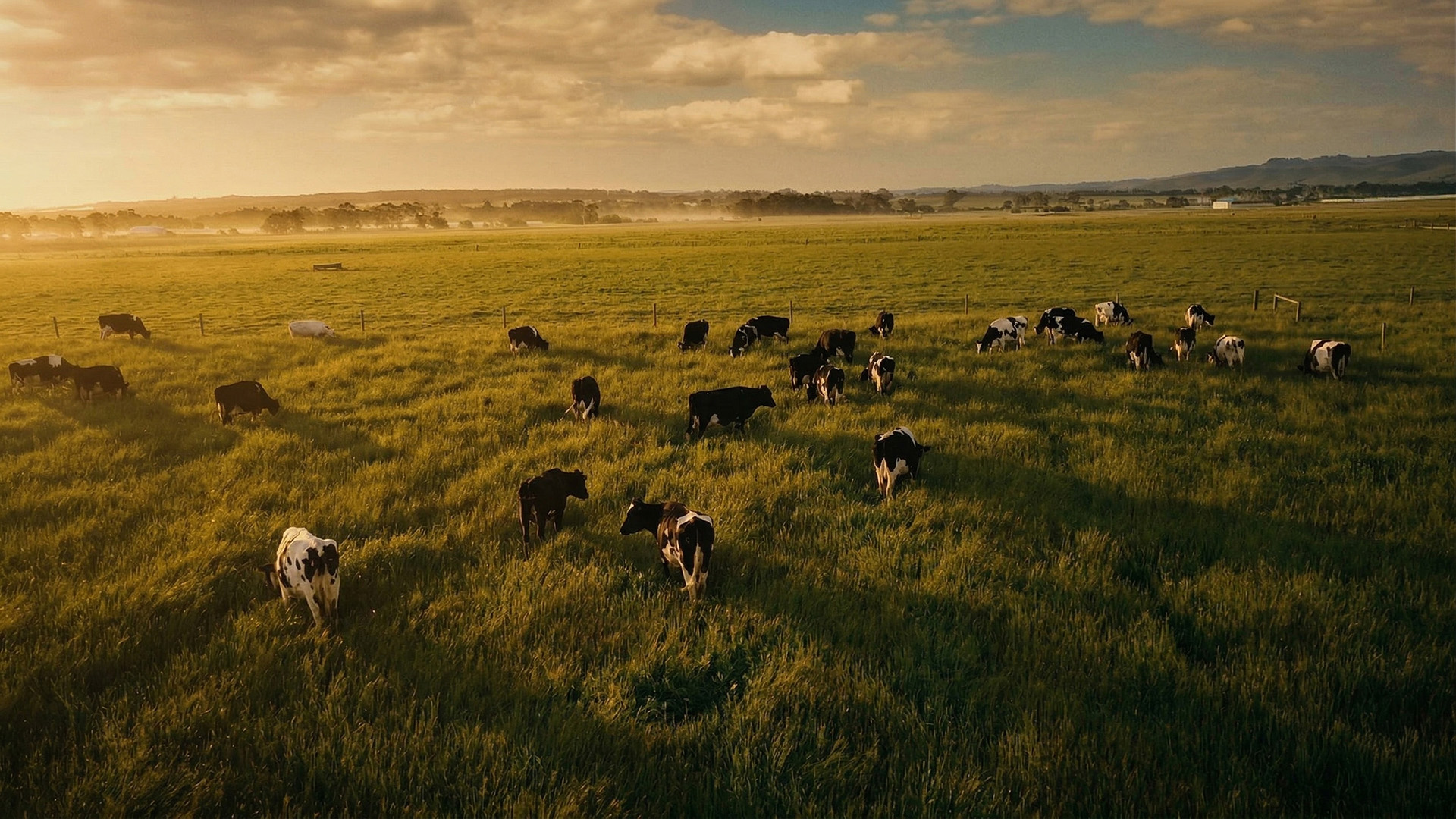
Our Holstein Friesians have grazed the same land at Glen Forbes since Glen’s parents, Attilio and Mary Bisognin, established the dairy in 1966. The herd is ours. The milk is theirs. When Tone Petersen walks into the cheese room on a Monday morning, the milk he’s working with came from those cows, on that property, the day before.
There’s no blending. No correction. No adjusting the numbers to match last month’s batch.
What the season gives us is what goes into the cheese.
In spring, when the pasture flushes green and the cows are grazing well, the milk is bright and lively. In autumn, as the season turns and the cows shift to cooler-weather grasses, the milk gets richer — the fat rises, the protein deepens, the flavour settles into something more complex. In the middle of winter, there’s an earthiness to it that you simply can’t manufacture.
Tone knows this. He’s been making cheese long enough to feel the difference in the curd before he can measure it. Autumn curd holds differently. Spring curd moves faster. The cheese he makes on a given Wednesday is a direct expression of what the land was doing that week.
What Non-Homogenised Actually Means
If you’ve picked up a bottle of Bass River Dairies milk — our farm milk, bottled straight from the herd — you’ll have noticed the cream line sitting at the top. That’s not a flaw. That’s what milk looks like before it’s been processed into uniformity.
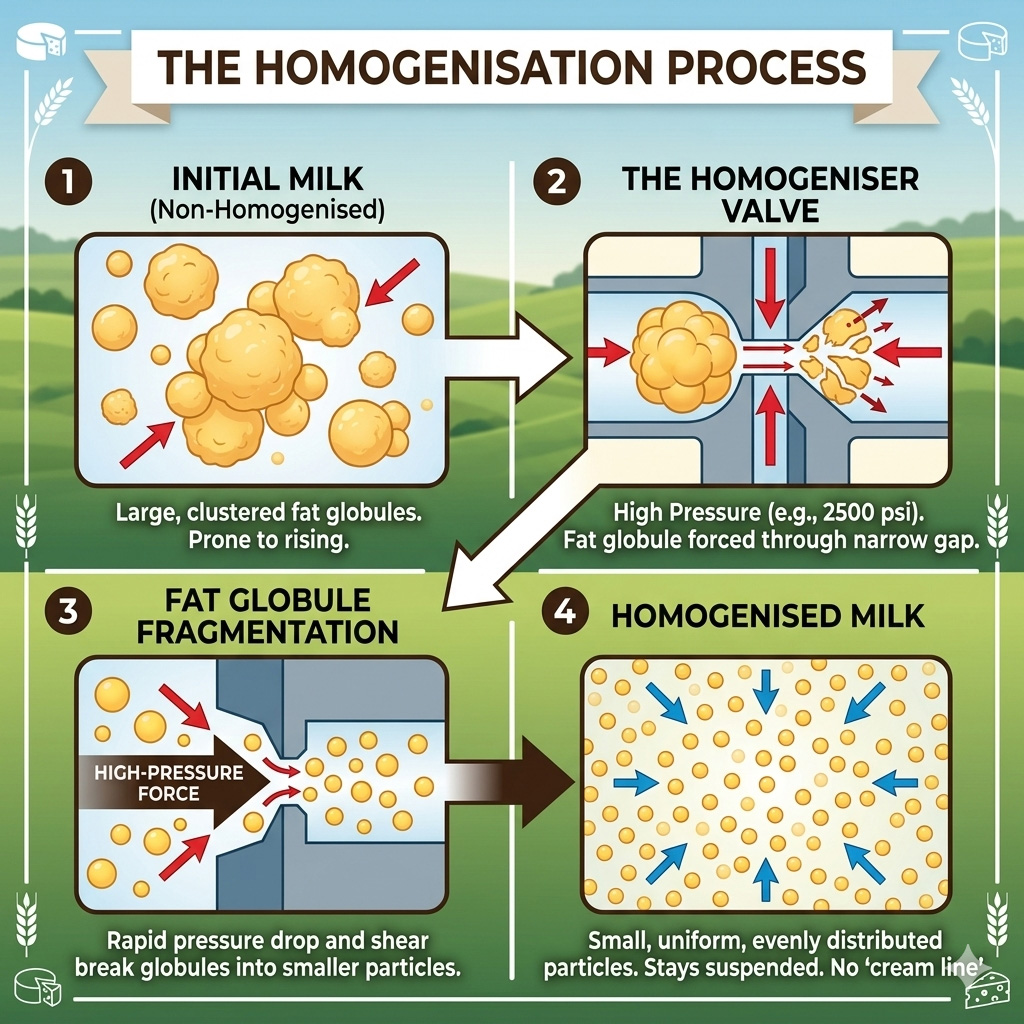
Homogenisation breaks the fat globules apart under high pressure, keeping them suspended throughout the liquid. It’s why supermarket milk looks the same from the first pour to the last. It also changes the texture, and most cheesemakers will tell you it changes the flavour too — flattening some of the fat-soluble compounds that carry the most character.
Our milk goes into the cheese whole. The fat is intact. The structure is intact. The seasonal variation is intact.
That’s why a wheel of Bassine Queen cut open in June tastes a little different from one cut in November. Not worse — different. The brie ripens into something deeper in winter, brighter and more delicate in spring. It’s the same recipe, the same cheesemaker, the same care. What changes is the milk, and the milk changes because the land changes.
That’s terroir. It’s a word people usually apply to wine, but it belongs to cheese just as much.
Why This Is Harder to Find Than You’d Think
Farmhouse cheese — made on the property where the animals live, from milk that hasn’t travelled far or been blended with anything — is genuinely rare in Australia. Most cheese you’ll find in a deli or a supermarket, even good cheese, is made in a facility that buys its milk in. The farm and the cheese room are separate operations.
At Bassine, they’re the same operation. The cows Glen manages in the morning are the source of what Tone makes by hand three days a week. The milkshake Kaye serves you in the cafe came from the same herd. Luke’s gelato — made fresh on-site, flavours changing with the week — starts with the same milk.
Nothing comes in from outside. Nothing gets adjusted to be something it isn’t.
How to Find It
You don’t have to make the drive to taste it — though if you’re anywhere near the Bass Highway, we’d encourage you to. The farm is about eighty minutes from Melbourne and twenty from Phillip Island, and the cafe is worth the detour on its own.
But if you want to start closer to home, Bassine Queen — our brie, with a bloomy white rind and a centre that turns soft and oozy as it ripens — is available through stockists across Gippsland, Melbourne, and the Mornington Peninsula. So is the Bass River Gold and our Aged Cheddar. Ask at your local cheesemonger, or check our stockist list to find the nearest one.
One herd. One milk. Two ways to enjoy it — a wheel of Bassine Queen from your local cheesemonger, or a platter at the farm with the paddock right outside the window.
We know which one we’d choose. But we might be biased.
For more on the person who translates single-herd milk into cheese, read our profile of Tone.
If you’ve seen the cream line at the top of the bottle, that’s from our farm milk — Bass River Dairies’ Bass River Dairies milk.