Winter milk: How Gippsland's richest milk shapes cheese
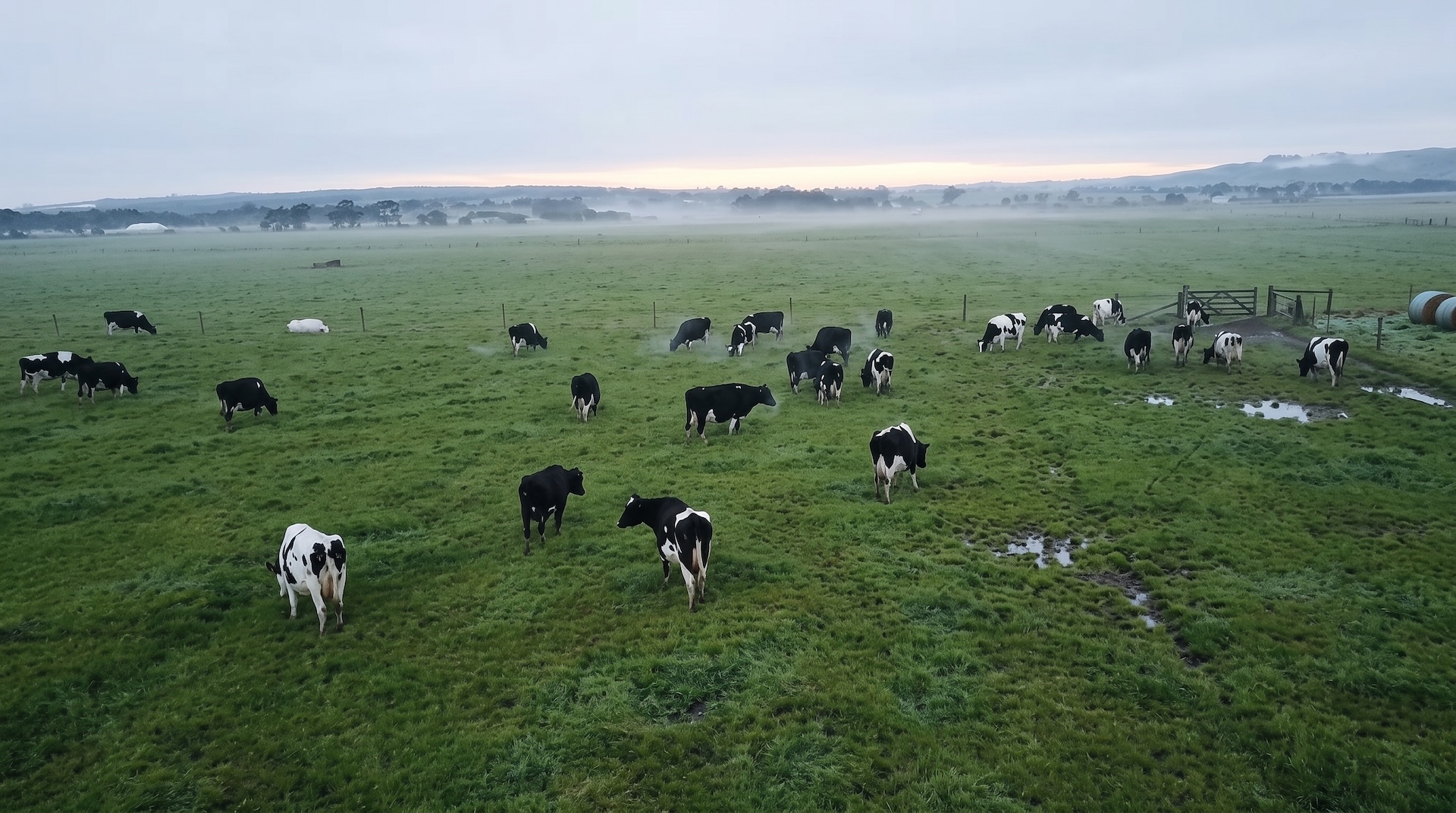
Since October 2026 we no longer milk our own herd — read what changed.
Winter milk is the richest we get all year — higher in fat and protein, firmer in the vat, and immediately obvious in every cheese Tone makes. Here’s exactly why Gippsland’s cold, wet months and the switch to stored forage push milk components up, how that firmer curd changes our cutting and pressing in the make room, and what Glen does on-farm to keep the herd healthy so we can turn winter’s milk into Bass River Gold, Aged Cheddar and Bassine Queen.
If you read our autumn piece, you’ll know the fat and protein in our milk start to rise as the summer pasture winds down. Winter is where that climb tops out.
The coldest months, the richest milk
It sounds backwards, but it’s true: the milk our herd gives in the depths of winter is the fullest of the whole year. Across dairy country the pattern is well established — milk fat and protein sit at their highest in winter and their lowest in summer. Ours is no different.
A few things drive it. When the paddocks stop growing — and in Gippsland the grass all but stalls until spring — the cows move onto our stored feed: hay and silage we cut and put away in the good months. That feed is more energy-dense than a mouthful of tired winter grass, and denser feed pushes the components in the milk up. On top of that, cold cows burn more just to hold their body heat, so we make sure there’s plenty in front of them. More energy in, richer milk out.
Because our milk is non-standardised and non-homogenised, none of this gets smoothed away. We don’t skim it back or top it up to hit a number. Whatever the season builds into the milk is what ends up in the bottle of Bass River Dairies milk — and what Tone adds into the vat. Winter just happens to hand him the richest raw material of the year.
Firmer fat, firmer curd
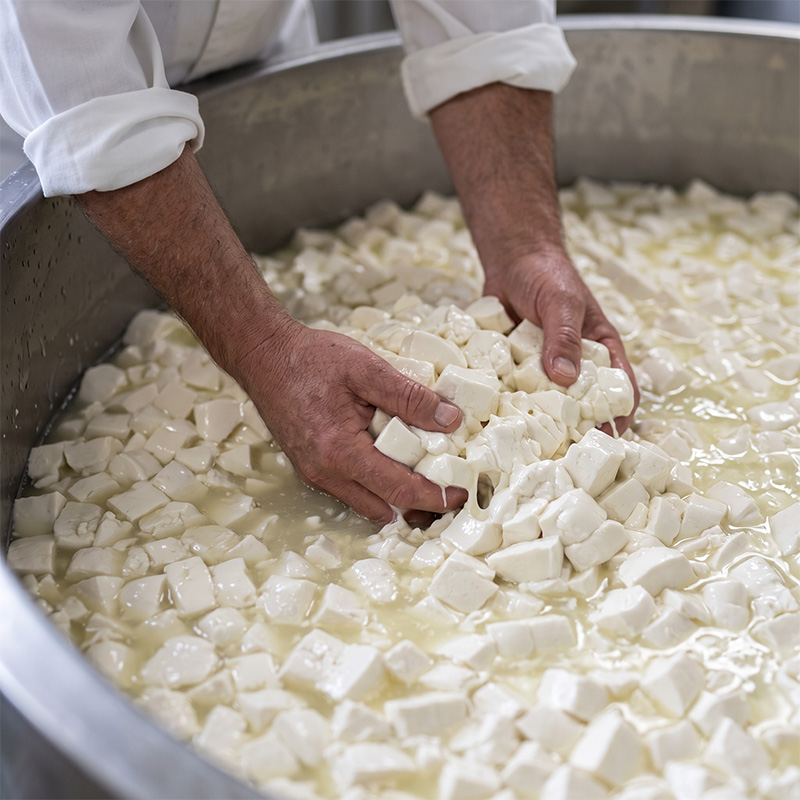
There’s a quieter change too, one you’d only notice with your hands in the curd. Winter milk carries more saturated fat than summer milk — the kind of fat that sits a little firmer. Tone can feel the difference on his Monday, Wednesday and Friday mornings in the make room. The curd sets with more backbone. It holds a cut cleanly and stands up well through the day’s work.
That firmness is a gift for the cheeses that need structure and time. The Bass River Gold and the cloth-wrapped Aged Cheddar we start now will spend months maturing in the cool room while the weather does its worst outside. Rich winter milk gives them a base with real character to age into. It’s the same long game we play all year — the season sets the milk, the milk sets the cheese, and patience does the rest — but winter stacks the deck in the cheese’s favour.
Even Bassine Queen, our brie, carries the season. A richer milk means a rounder, fuller wheel under that Penicillium candidum rind.
Keeping the herd right through it
None of this happens on its own. A cold, wet winter is the hardest stretch of the year to farm well, and Glen earns every drop of that rich milk.
Wet is the real enemy here, more than cold. A dry cow with a full belly handles a Gippsland winter comfortably; a wet, underfed one loses condition fast. So the work turns to shelter, dry bedding, and feed that’s measured out and matched to the herd — the same instinct for consistency the cows have rewarded since Attilio and Mary first milked here in 1966. Glen watches their condition through the whole season, because a herd that goes into spring in good order is a herd that thrives when the grass finally comes back.
That’s the trade winter asks of us: harder work on the farm, in exchange for the best milk of the year. We’ll take it every time.
Come in out of the cold
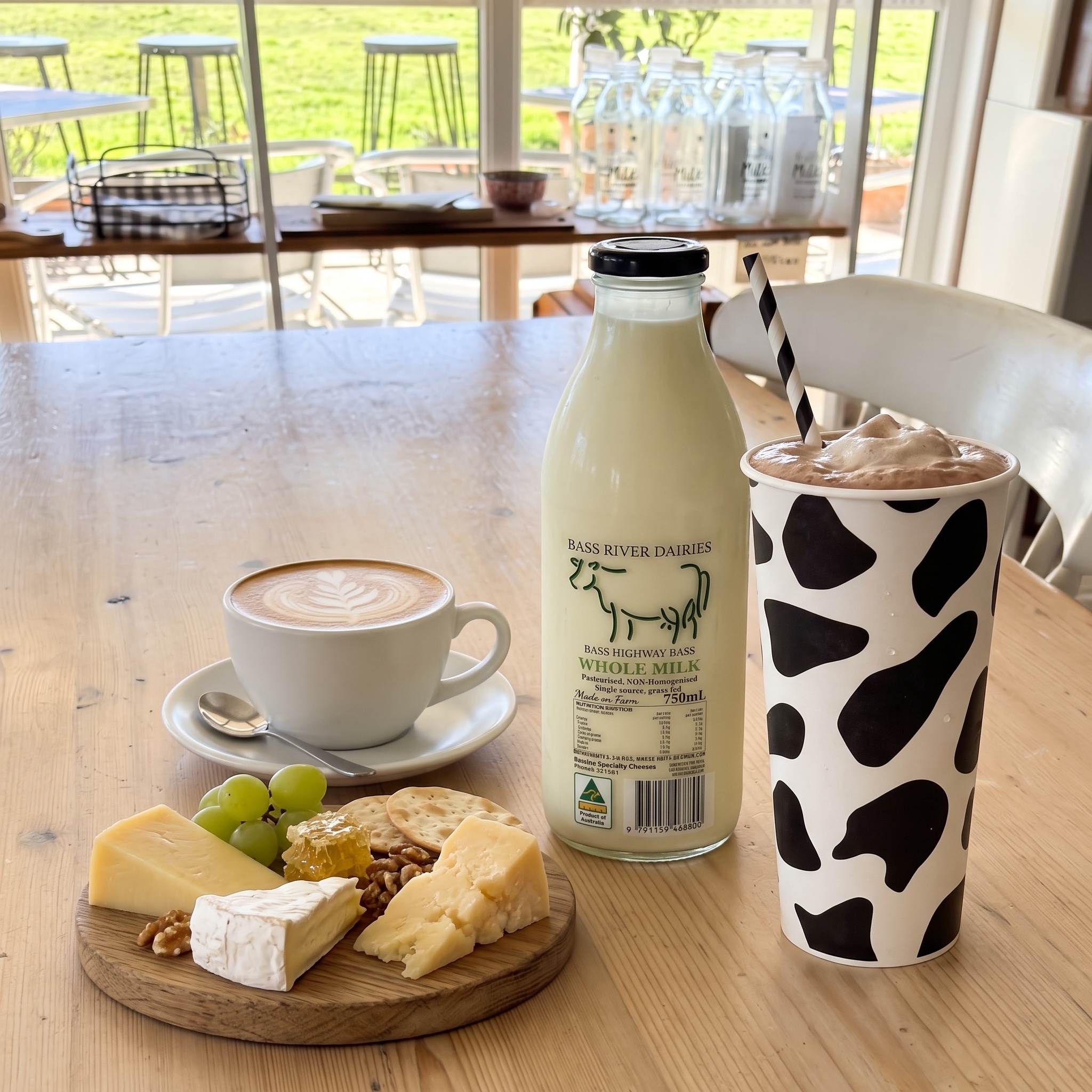
Winter might be our favourite time to have people visit, honestly. The café’s warm, the milkshakes don’t care what season it is, and there’s something worth seeing in a wheel of cheese maturing quietly in the cool room while the rain comes sideways off the paddocks.
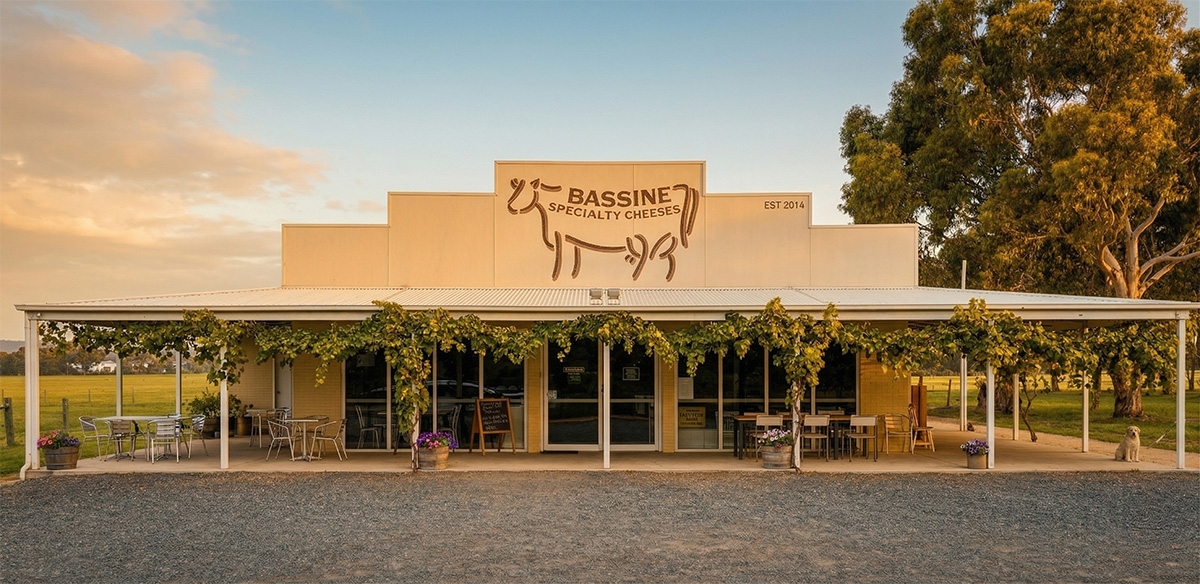
We’re open Friday to Sunday, 9 till 4. Come in for a platter and a hot drink, watch through the production window, and taste what a cold Gippsland winter builds into the milk. If you’re timing a drive, Visit Victoria has the seasonal highlights for Phillip Island and Gippsland.
Everything’s connected here — the weather, the pasture, the herd, the milk, the cheese on your plate. Winter is just when the milk gives its most.
National data and extension notes from Dairy Australia explain how season and feeding drive milk fat and protein to peak in winter. Dairy Australia on milk composition.